;Resize=(180,74))
THE ULTIMATE HOW-TO GUIDE FOR STYLING AND DEFINING CURLY HAIR
How to Determine Your Curl Type and Porosity
Before you change your routine, take a closer look at your curls. Your curl pattern and porosity influence everything from how quickly your hair absorbs moisture to which styling techniques deliver the best definition.
Understanding the curl type system
One of the biggest curly hair myths is that all curls behave the same way. In reality, curly hair types vary dramatically, even on the same head of hair. Knowing where your hair sits on the curl spectrum can make choosing products and techniques much easier.
Type 2 (Wavy)
- 2A: Loose, barely-there waves with a fine texture
- 2B: More defined S-shaped waves
- 2C: Stronger waves with some curls beginning to form
Type 3 (Curly)
- 3A: Large, loose curls with plenty of movement
- 3B: Springy ringlets with noticeable volume
- 3C: Tight curls
Type 4 (Coily)
- 4A: Soft, defined coils
- 4B: Tighter strands with a Z-pattern shape
- 4C: The tightest coil pattern with significant shrinkage
Don't worry if you don't fit neatly into one category. Many people have a mix of curl patterns, especially around the crown, temples or nape of the neck.
How to identify your curl type at home
The easiest way to identify your curl type is to look at your hair when it's freshly washed, free from styling products and mostly dry. Resist the urge to brush it out or stretch it. Instead, pay attention to the shape your hair naturally forms.
If your hair creates gentle S-shaped bends, you're likely in the Type 2 family. If it forms ringlets or spirals, you're probably Type 3. If it shrinks significantly and forms tight coils, you'll likely fall into the Type 4 category.
TOP TIP: Focus on your dominant pattern rather than the occasional curl that decides to do its own thing.
What is hair porosity and why does it matter?
Curl type tells you what shape your hair grows in. Porosity tells you how your hair handles moisture. This matters because two people with identical curl patterns can have completely different styling results based on porosity alone.
Low porosity hair
- Cuticles sit tightly closed
- Products can feel like they sit on top of the hair
- Hair takes longer to become fully wet and longer to dry
Normal porosity hair
- Absorbs and retains moisture well
- Responds predictably to most styling products
- Often holds styles effectively
High porosity hair
- Absorbs moisture quickly
- May feel dry shortly after styling
- Often benefits from richer conditioning products and stronger hold products
Ever feel like your friend swears by a product that does absolutely nothing for your curls? Porosity is often the missing piece of the puzzle.
The hair porosity test (how to do it at home)
The water-glass test can provide a useful clue about your porosity level. While it's not perfect, it can help you understand how your hair interacts with moisture.
- Take a clean strand of hair after washing.
- Fill a clear glass with room-temperature water.
- Place the strand into the water.
- Wait for several minutes.
- Observe what happens.
If the strand floats: your hair may have low porosity.
If it slowly sinks: your hair likely has normal porosity.
If it sinks quickly: your hair may have high porosity.
Also pay attention to how your hair behaves day to day. If products disappear into your hair almost instantly or your hair seems dry again by the next morning, those clues can be just as valuable.
The Ideal Wash and Prep Routine for Curly Hair
If you're wondering why some wash days produce amazing curls while others seem determined to test your patience, your prep routine may be the reason. Hydrated curls are easier to detangle, style and define, which is why everything starts here.
Step-by-step curly hair wash routine
A solid wash routine creates the foundation for every styling step that follows.
- Gently pre-detangle using conditioner or a lightweight oil if your hair tangles easily.
- Thoroughly wet your hair from roots to ends.
- Cleanse with a hydrating curly hair shampoo, using your fingertips to massage the product into the scalp gently. Wash off.
- Apply conditioner generously through the mid-lengths and ends.
- Detangle with your fingers or a wide-tooth comb while the conditioner is still in your hair.
- Rinse with cool water to help smooth the cuticle.
- Gently squeeze out excess water using your hands or a microfiber towel.
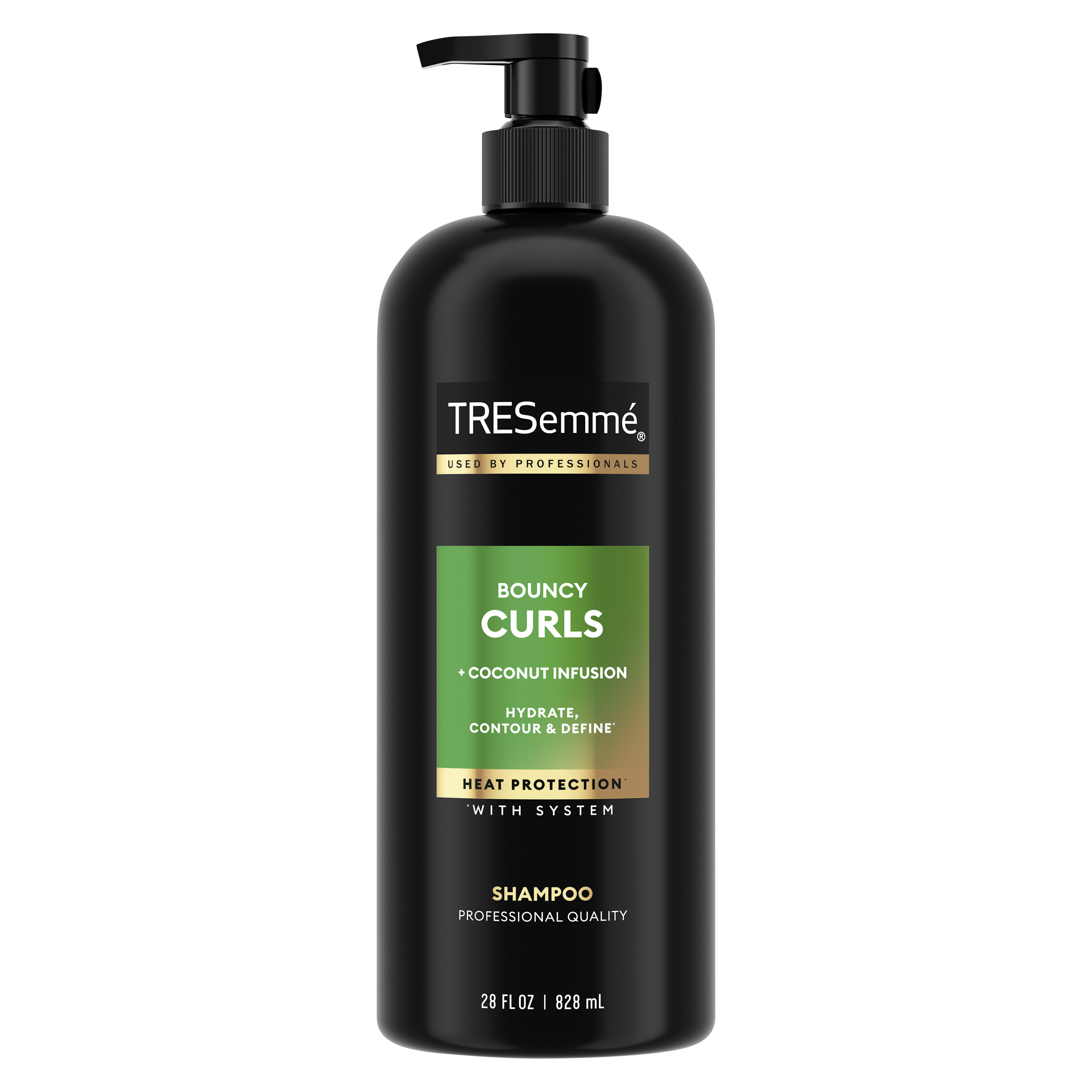
TRESemmé Bouncy Curls Shampoo helps support curl definition from the very beginning of your routine. Infused with coconut, it helps hydrate, contour and define curls while preparing them for styling.
How often should you wash curly hair?
There isn't a universal schedule. Some waves and looser curls look best when washed every few days, while tighter curls and coils often go longer between washes.
A better question is: how does your hair feel?
If your scalp feels oily, your curls seem weighed down or your roots lack volume, it may be time to cleanse. If your curls still feel hydrated and springy, you can often stretch another day or two.
Why conditioning matters more for curls
Curly hair naturally struggles to distribute scalp oils from root to tip. That's one reason curls often feel drier than straight hair. Using a nourishing curly hair conditioner helps replenish moisture, improve slip during detangling and support longer-lasting definition throughout the week.
TRESemmé Bouncy Curls Conditioner features coconut oil to nourish, strengthen and help curls stay moisturized until your next wash.
Step-by-Step Styling Guide: Layering Products on Wet Hair
Great curl definition rarely comes from a single product. The secret is applying the right products in the right order while your hair is still wet, helping curls hold their shape and dry with less frizz.
The wet-hair styling method
Water helps curls clump together, which often leads to better definition and less frizz once everything dries.
- Start with soaking-wet hair. Curly hair styling products generally work best on very wet strands, so use a water spray bottle to re-wet any sections that have started to dry.
- Apply a leave-in conditioner from the mid-lengths to the ends.
- Follow with a curl cream for moisture and definition. Use a mousse instead if you want a bit more hold.
- Layer a small amount of curl gel over the top, focusing on the ends.
- Use the "praying hands" or smoothing method to distribute products evenly.
- Gently scrunch upward to encourage your natural curl pattern.
- Flip your head upside down and scrunch upward to help distribute product evenly and encourage volume at the roots.
If you've ever found yourself adding more and more product but seeing fewer results, try adding more water instead. Curls often respond better to hydration than product overload.
Why the order of products matters
Think of product layering like getting dressed for the weather. Every step serves a purpose.
Leave-in conditioner helps keep curls hydrated. Creams and mousses add shape and definition. Following with an alcohol-free curl gel creates a humidity-resistant cast that supports longer-lasting definition.
When products are layered in the right order, they work together rather than competing with one another.
Mousse vs gel (when to use each)
A lot of people assume they need to choose between mousse and gel, but they often work beautifully together.
If you're after soft movement and touchable definition, a mousse for curly hair can help create bounce while maintaining flexibility. The TRESemmé Flawless Curls Mousse uses coconut and avocado oil alongside Pro Lock Tech™ to help curls stay defined for up to 24 hours without feeling crunchy.
Gel is ideal when you want stronger hold, longer-lasting curl definition or extra protection against humidity. The TRESemmé Flawless Curls Gel helps lock in moisture while creating a flexible cast that supports curl shape throughout the day.
A good rule of thumb? Reach for mousse when you want softness and volume. Reach for gel when you need extra staying power. Used together, mousse and gel can create the sweet spot between soft curls and long-lasting hold. Just be mindful not to overload your hair with product.
Drying and Finishing Techniques for Frizz-Free Curls
Drying is where many curl routines succeed or fail. A few small technique changes can help protect definition, reduce unnecessary frizz and give your curls the soft, touchable finish you're looking for.
Air drying vs diffusing: which is right for you?
Neither method is better. They simply create different results.
Air drying
- Gentlest option
- Requires the least manipulation
- Often works well when you have time to spare
Diffusing
- Speeds up drying time
- Can create more volume at the roots
- Helpful when you're getting ready for work, class or a night out
PRO TIP: If your hair takes hours to dry naturally, a diffuser can be a game changer.
How to diffuse curly hair without frizz
The biggest mistake people make with diffusers is moving them around too much.
- Attach the diffuser to your dryer.
- Set the dryer to low heat and low speed.
- Cup a section of curls into the diffuser bowl.
- Hold in place for 20-30 seconds.
- Move to the next section.
- Continue working around the head.
- Finish with a cool shot.
Try not to touch your curls too much while they're drying. The less you disturb them, the more definition you're likely to keep.
How to "scrunch out the crunch"
If you've used gel, your curls may feel slightly firm once they're completely dry. That's called a cast, and it's actually a good thing. Once your hair is 100% dry:
- Place a few drops of hair oil onto your palms.
- Rub your hands together.
- Gently scrunch your curls upward.
This breaks the cast while preserving the definition underneath, leaving you with soft, touchable curls rather than stiff ones.
Finishing touches for polished curls
Once your curls are fully dry, it's all about preserving your hard work. A lightweight hairspray for curly hair can help maintain definition without sacrificing movement. TRESemmé Bouncy Curls Layering Hairspray helps lock in curls with touchable hold while keeping them soft and flexible.
You can also add a small amount of lightweight oil for extra shine or gather your curls into a loose ‘pineapple’ on top of your head before bed to help preserve definition overnight.
Curling Techniques for Non-Curly Hair
No natural curls? No problem. You can still create long-lasting curls with the right preparation and styling techniques.
How to curl hair without heat
- Foam curlers. Wrap slightly damp hair around foam curlers before bed and remove them in the morning for soft curls.
- Overnight braids. Braid damp hair before sleeping. Looser braids create soft, beachy waves, while smaller braids produce a more defined, textured wave pattern.
- Sock curls or twisted buns. Wrap sections of damp hair around a sock or twist them into buns overnight. This creates curls without exposing your hair to heat damage.
How to get the best curls with a curling iron
Always start with a heat protectant product. Work in small sections, wrap each section around the barrel and hold for 8–10 seconds. Alternate curl directions for a more natural finish and allow curls to cool completely before brushing or separating them.
Whether your curls are natural or created with styling tools, patience during the cooling and setting stage often makes the biggest difference.
Once you understand your curl pattern, porosity and ideal product layering routine, how to style curly hair becomes much less about trial and error and much more about consistency. Great curls aren't about perfection. They're about understanding what your hair needs and giving it the support to shine.
Discover the TRESemmé curly hair range. It is tailor-made to wash, define, and finish your curls with salon-quality results, every time.
FAQs
How to style curly hair?
The best way to style curly hair is to start with hydrated hair, apply styling products to soaking-wet curls, layer products in the correct order, and let your curls dry with minimal disturbance. Understanding your curl type and porosity can also help you choose techniques and products that work with your hair rather than against it.
What are the best curly hair styling products?
The best curly hair styling products are the ones that match your curl type, porosity, and styling goals. Most curl routines benefit from a hydrating leave-in conditioner, a defining mousse or cream, and a gel or hairspray that helps maintain curl shape and reduce frizz throughout the day.
How do I stop my curly hair from being frizzy?
The best way to reduce frizz is to focus on hydration, apply products to wet hair, and avoid touching your curls while they dry. Frizz often happens when curls are dry, over-manipulated, or exposed to humidity without enough moisture and hold to support their natural pattern.
How do I know what my curl type is?
You can identify your curl type by looking at your natural curl pattern on clean, product-free hair. Loose waves generally fall into Type 2, ringlets and spirals into Type 3, and tighter coils into Type 4, although many people have a combination of patterns.
What's the best way to dry curly hair without causing frizz?
The best way to dry curly hair without causing frizz is to either air dry it with minimal touching or use a diffuser on low heat and low speed. The less you disturb your curls while they're setting, the more definition you're likely to keep.
What curl type do I have?
Your curl type depends on the shape your hair naturally forms when it's clean and dry. Look for waves, spirals, ringlets, or coils, and remember that it's completely normal to have more than one curl pattern across different areas of your head.
How do I define my curls without crunch?
To define curls without crunch, use styling products that provide flexible hold and gently scrunch out any cast once your hair is completely dry. This helps preserve curl definition while leaving your curls soft, touchable, and full of movement.
How long does it take for curly hair to dry naturally?
Curly hair can take anywhere from one to several hours to dry naturally, depending on your curl type, density, porosity, and hair length. If your hair feels like it's still damp long after wash day, a diffuser can help speed things up while maintaining curl definition.